( ENSPIRE Entertainment ) Lockeroo Invites Judges Mark Starr, Bill Goodson, JEMIN & More
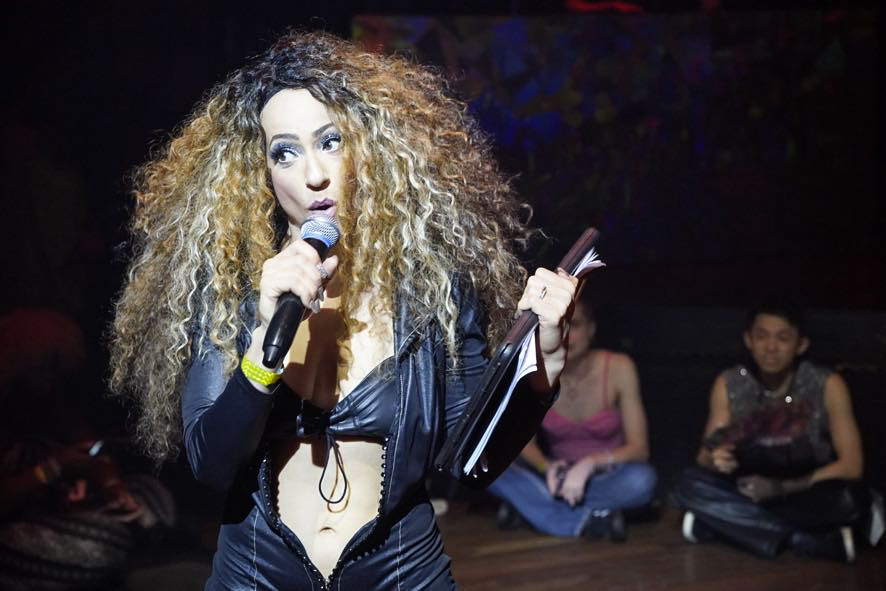
On July 27, global Waacking ambassador Princess Lockeroo, Samara Cohen-O’Neal, created the acclaimed “Waack to the Future”, which was back for a night of dance, fashion, and cultural pride at the House of Yes. The House of Yes is a collective of performers and creatives who express their artistic dance forms and build community. Located in Bushwick, Brooklyn, the venue built an experience to remember. This event was founded by Lockeroo, a producer, director, educator, and viral dance sensation. A Bessie Award-winning choreographer, she has spread Waacking to over 27 countries, building communities and promoting self-love.
“Waack to the Future” united top dancers from around the world to showcase rhythm, identity, and self-expression. The event included: The Dance Battle, Costume Contest, Choreographer Showcase, Immersive Art & Vibes. A diverse panel of judges graced the event, all of whom had experience affiliated with Waacking. They had Mark Starr, a dancer from Soul Train and American Bandstand who was part of the original Waacking and disco scene, Wizzard, a Waacking DJ who spins at battles and festivals around the world, and the official DJ for Waack to the Future. Next, Bill Goodson, a choreographer who helped bring Waacking into the global spotlight during Diana Ross’s legendary 70’s tour, and JEMIN, a South Korean viral sensation in the evolution of Waacking with magnetic style and precision. The judges attended the waacking experience at Ailey Extension, New York’s largest building dedicated to dance, which took place in the days leading up to the July 27 night. The theme for “Waack to the Future” was “Decades of Rhythm,” taking the audience on a journey from disco to today’s top hits.
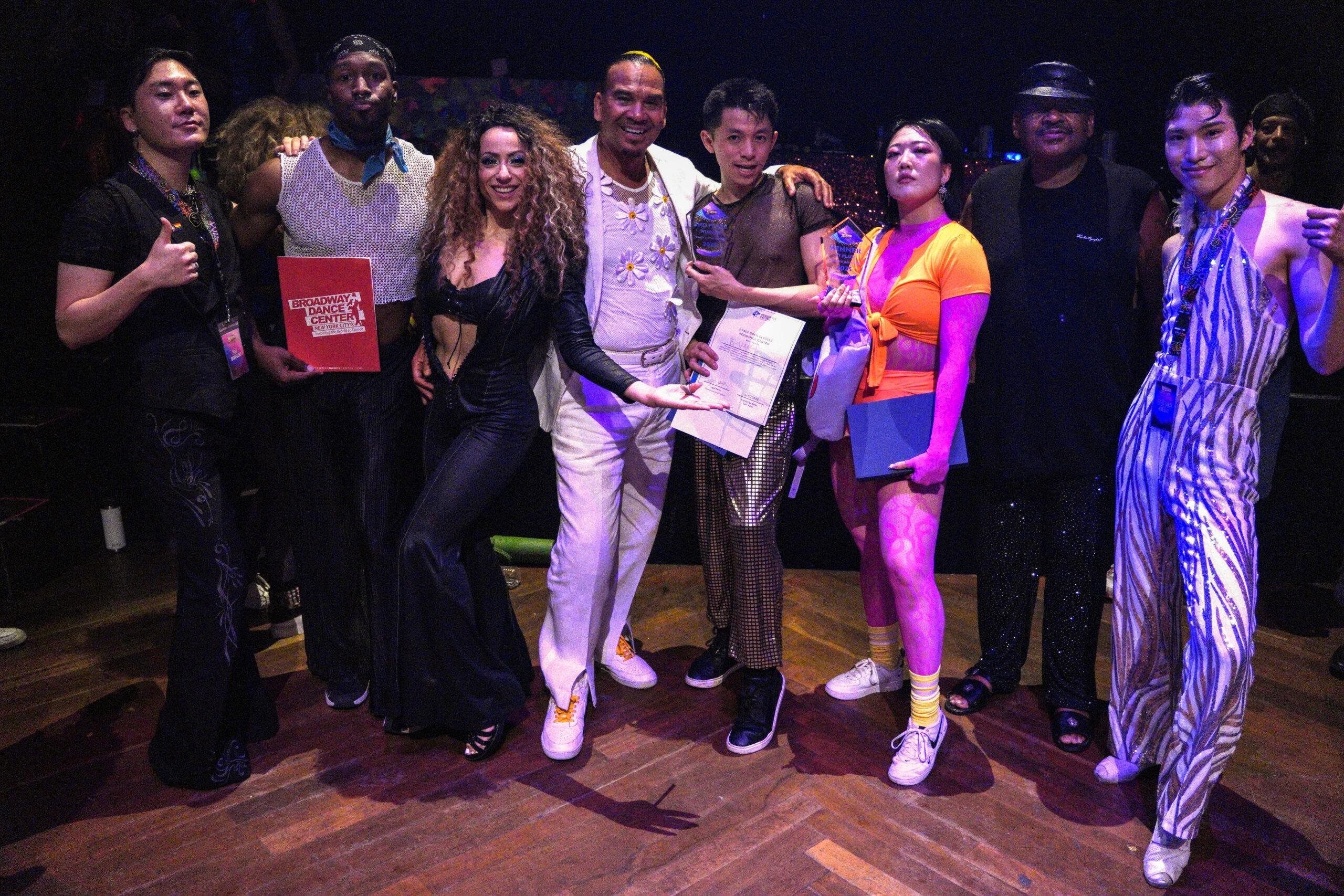
Lockeroo shares the aspects of her dance career that contributed to the production of the event Waack to the Future. In addition, she discusses how Waack to the Future promoted the art form to newer generations and the mission of the House of Yes, aligning with the show. Furthermore, Lockeroo explains the importance of bringing a diverse generational group of judges from the Waacking scene and the inspiration behind the Decades of Rhythm theme.
As a Bessie Award-winning choreographer, a viral dance sensation, and a philanthropist. How do all these different aspects of your career come together for the creation and production of an event like “Waack to the Future”?
Waack to the Future is really a culmination of the many years I’ve spent traveling around the world spreading Waacking. I’ve traveled to over 30 countries and have been at the forefront of the resurgence, witnessing the dance evolve into a global movement. My background in theater and my work as a choreographer have shaped the way I envision dance battles. Typically, in New York, battles are held in dance studios, gyms, or warehouses, but because of Waacking’s theatricality, elegance, and beauty, and its birthplace in gay clubs—I’ve always seen this dance belonging in a nightclub environment with a theatrical element and storyline to keep it engaging for audiences new to battles. That is what Waack to the Future is: a fusion of my work as a global Waacking ambassador and my roots as a New York theater kid. In the past, we partnered with Broadway Cares/Equity Fights AIDS to raise funds, but more recently, I’ve been focused on access—providing free tickets to LGBTQ and BIPOC community members to honor Waacking’s roots and its legacy from the Black, queer, and trans community.
“Waack to the Future” is about dance, fashion, and cultural pride. As a Waacking ambassador, how did you see the Waack to the Future event promoting the art form and fostering more community for newer generations?
Although the Waacking resurgence began in New York in 2003, it grew more quickly overseas. For many years, I was teaching packed classes in places like Kazakhstan, China, Korea, and Italy, while attendance in New York was smaller. That began to change in 2022 with support from Works & Process and Peridance, who gave me residencies that helped form my company, The Fabulous Waack Dancers, and the educational Waack Dancer Training Program. While I’ve produced Waack to the Future since 2014, contestant numbers were always modest compared to the 150–600 dancers I judged overseas. For example, at our 2019 Waack to Africa edition at House of Yes, we had 300 attendees and 50 contestants, with only one or two Americans. But this year, Waacking has truly blown up in New York and across the US. We had 104 contestants, mostly Americans, alongside dancers flying in from China, Vietnam, and Canada. This feels like the second resurgence. Events like this are transformative: they create community, give people courage, and inspire them to follow their dreams. I personally discovered dance in the club, and it completely changed the trajectory of my life. Dance battles gave me something positive to focus on and a way to experience nightlife that was inclusive, wholesome, and inspiring. Many of my students start dancing after attending Waack to the Future, whether for professional aspirations or personal growth. These events build community in the deepest sense.
How did the mission of the House of Yes align with the vision for “Waack to the Future,” and what was the significance of this venue for the show?
Waacking was born in the clubs, and I feel it belongs there. I love seeing the dance in a nightclub environment where participants and audiences can both battle and experience the dance in its true context. This year, we flew in Master DJ Wizzard from South Korea, and before the battle began, the entire club was Waacking—arms flying, posing—it felt like the 1970s reborn. That’s what I want to recreate. House of Yes is the perfect venue. I’ve known the founders, Kae and Anya, since the first iteration of House of Yes, and they’ve always been incredibly supportive of me and my work. The venue, as a queer club that doubles as a theater, represents queerness, inclusivity, safe space, and radical artistic expression. It also allows us to add theatrical layers: pop-up choreography, aerialists descending from the ceiling, and a dramatic reveal from the front cocktail lounge into the main stage. No other dance battle offers that kind of experience. I love House of Yes, and while my only fear is that we may eventually outgrow the space, that kind of growth is positive. I’ll keep the event there as long as possible while we continue to build.
What was the intention behind bringing together these different generations of talent, such as Mark Starr and Bill Goodson, who are from the original Waacking scene, and new sensations such as JEMIN, to the judging panel?
I’ve always been deeply passionate about the history of Waacking. My teacher Tyrone Proctor was a former Soul Train dancer who instilled in me a reverence for the creators of Waacking, all of whom we lost to AIDS in the 80s and 90s. Anyone can learn the movement, but truly honoring the dance requires an understanding of its roots in the Black, queer, and trans communities—histories that are too often overlooked or uncredited. One of the most beautiful things about dance is the way generations intersect. I love surrounding myself with people older than me, who carry history and wisdom, and younger dancers, who bring fresh energy and innovation. The panel was intentionally intergenerational, offering the best of all worlds—history, innovation, and inspiration in so many forms.
The theme for Waack to the Future was “Decades of Rhythm,” which celebrated the evolution of dance and fashion. What inspired the theme, and how did it help connect the historical roots of Waacking?
The Disco music that motivated the birth of Waacking has always been centra. It’s part of what made me fall in love with this dance. Waack to the Future is about honoring the roots while also embracing evolution. As Tyrone Proctor used to say, “When you change the music, you change the dance.” That’s why I wanted to see how Waacking transforms across genres. “Decades of Rhythm” shifted the music by decade each round—dancing Waacking to 90s classics and Y2K hits was exhilarating. It also opened the door for people less familiar with disco to connect with the dance. Still, we always honor the roots by featuring classic 70s disco in prelims and sometimes in finals or tiebreakers. Every year, we introduce a new theme: Waack to Africa with live drumming and a 7-to-Smoke battle, Waack to Broadway with show tunes, Waack to Jazz Era, and Waack to Classical with a live string quartet and Bridgerton realness. Each theme challenges dancers, keeping the event exciting and fresh. I’m not sure what the next theme will be yet, but the mission remains the same: to preserve this art form while pushing it forward.
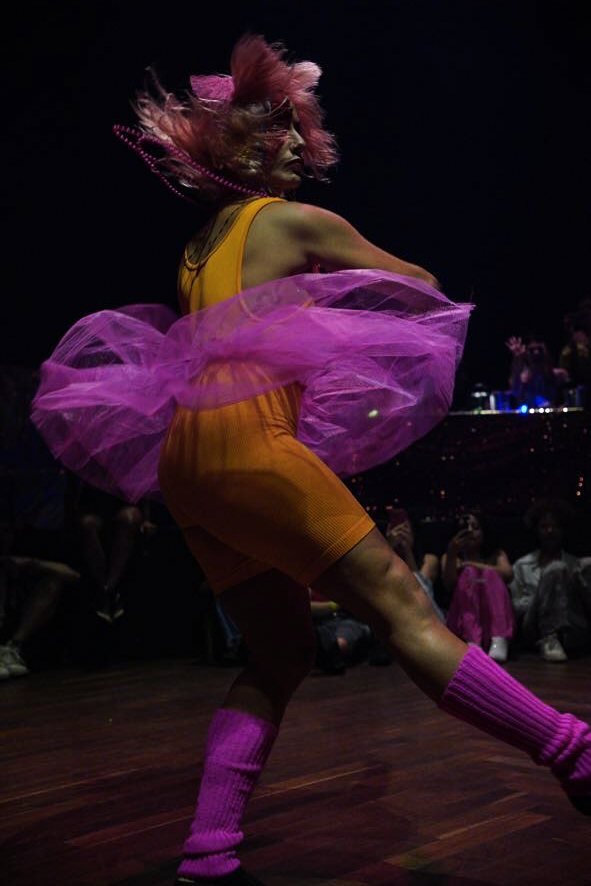
“Waack to the Future” was a huge success for all performers and creatives. Guests were encouraged to dress up in looks inspired by Disco, Donna Summer, David Bowie, Bell-bottoms, Fringe, Sylvester, Neon, Grace Jones, Glitter, Shoulder pads, Y2K Futurism, Butterfly clips, Missy Elliott, XXXtina, Low-rise jeans, Clubbing Eleganza, Doc Martens, pretty much anything.
Princess Lockeroo had brought back the Waacking scene. Her work has been featured on television platforms, including “So You Think You Can Dance?” “America’s Got Talent,” “Dancing With the Stars,” and she has worked with top pop artists such as Madonna, Jody Watley, and Icona Pop. She is also a philanthropist and LGBTQ rights activist who collaborates with and raises funds for various organizations. For more information on future events in dance, fashion, art, and Waacking, visit https://www.princesslockerooo.com/waacktothefuture.
Related Articles: International Museum of Dance Provides Original Experiences, Dance Instructor Transforms Students’ Lives Through Dance Therapy