

( ENSPIRE Perspective ) Duan Chan Shue, Owner/Operator of NBHD Brûlée, a Coffee Shop in Harlem
Op-Ed by Duane Chan Shue
Scams have become so routine that many of us barely blink when another warning pops up on our phones. One week, it’s a phony delivery text. The next is a fake charity appeal, a bogus online ad, or a phone call from someone pretending to be a bank or government agency.
In Harlem, you hear stories like that all the time–hardworking people nearly getting tricked by sophisticated fraudsters who know exactly how to push emotional buttons.

Scams are a serious threat, and they absolutely demand attention from our elected officials. The encouraging news is that many New York leaders are talking about the problem. The discouraging part is that too often their solutions target the wrong actors–and end up putting new burdens on the very people and businesses they’re trying to protect.
When we talk about stopping scams, we have to start with the actual culprits: the criminals orchestrating these schemes. It’s not the fault of someone who clicks a convincing fake link, nor is it the fault of the financial platforms where scams occur. The scammers are the ones setting the traps, refining their tactics, and exploiting gaps in the system.
Yet many public efforts focus on blaming the victims or regulating the tools instead of the criminals. New Yorkers are told to stay vigilant. That is sound advice as far as it goes, but vigilance alone cannot outmatch entire criminal networks. These fraud rings operate across borders, use encrypted communications, and work around the clock to test new ways to deceive honest people and small businesses. Public education matters, but it can’t be the entire strategy.
Some policymakers want to hold technology platforms liable for scams they did not commit. The New York Attorney General’s lawsuit against Zelle is a prime example. The case argues that payment platforms should reimburse users for fraud carried out by third-party criminals.
I understand the emotion behind this. Anyone who has ever lost money to a scam knows the frustration, the embarrassment, the sense of violation. But making platforms responsible for criminal acts committed by scammers won’t solve the underlying problem–and it could create serious challenges for small business owners like me.
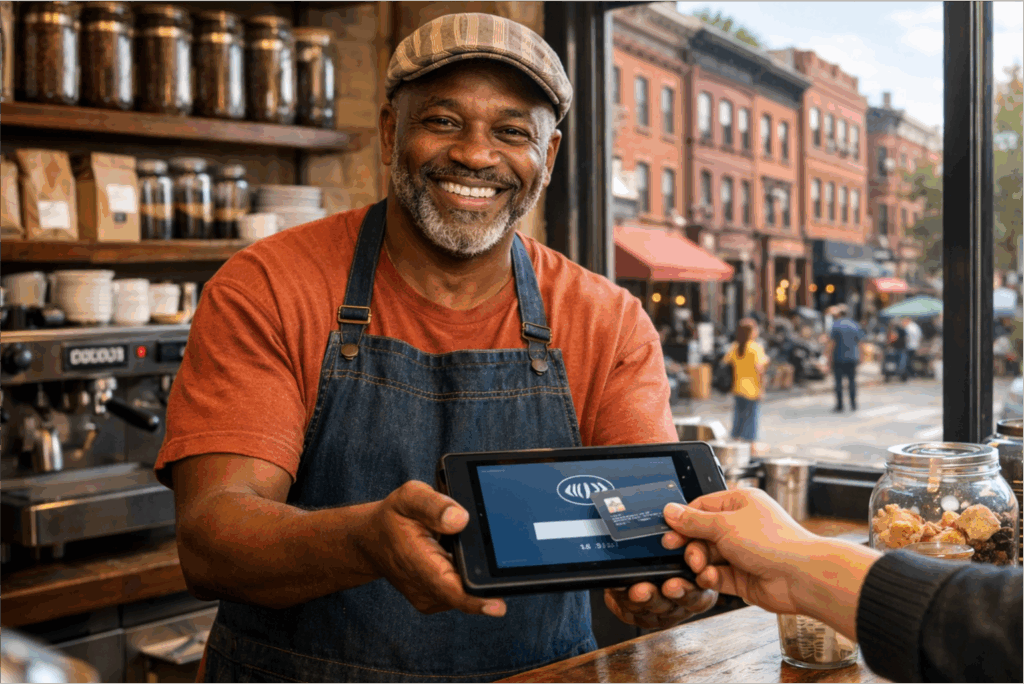
I run a small business here in Harlem. I rely on digital payments every day because they’re fast, secure, and convenient for my customers. With tools like Zelle, I can accept payments instantly without fees or delays. If these platforms are required to cover the full cost of every fraud incident, they will have no choice but to change how they operate. That could mean higher fees, stricter limits on transactions, slower access to funds, or losing services altogether. Any of those outcomes would make it harder for me to keep my business running smoothly.
This lawsuit reflects a broader pattern: instead of zeroing in on the people actually committing fraud, we end up shifting the burden onto consumers, small businesses, or the companies providing essential services. Meanwhile, local law enforcement often struggles to catch criminals who might be operating from another state or another continent. None of that gets at the source.
If we truly want to curb scams, we have to improve coordination between state, federal, and international authorities. Most importantly, we need policies that direct accountability at the criminals, not at the victims, and not at the platforms that enable modern commerce.
Scams don’t happen because someone clicked too fast. And they don’t happen because small businesses rely on digital tools to serve their customers. Scams happen because criminals exploit loopholes, technology, and human psychology for profit.
If we put our energy into stopping those criminals, we can protect consumers, strengthen confidence in digital tools, and help small businesses grow without fear of being the next target.
Related Articles: nick-anthony-business-founder, Advocates for Small Minority Owned Business