
( ENSPIRE Community Spotlight ) A Bronx Conversation on Public Funding, Integrity, and People-Powered Leadership
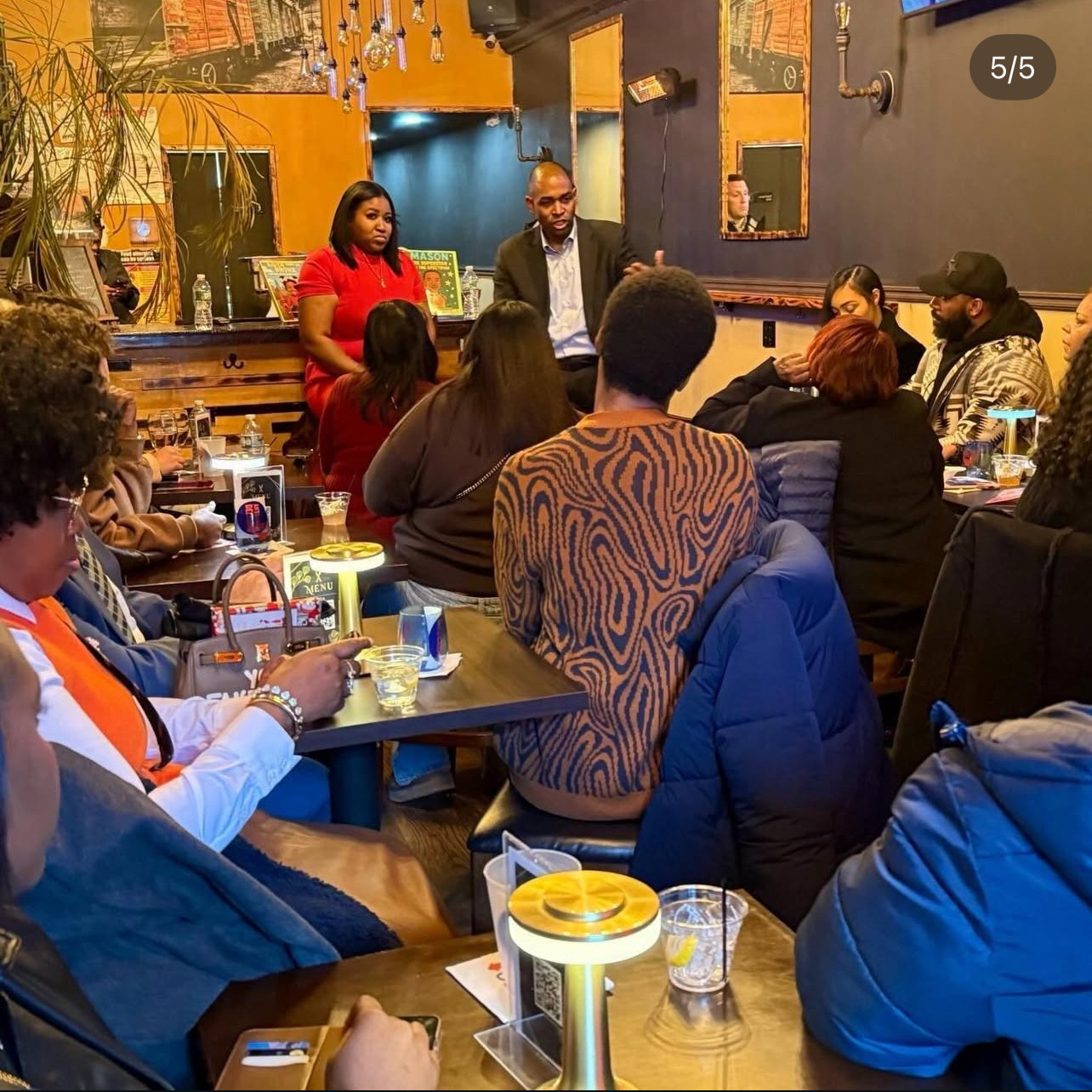
On a recent evening in the Bronx, community members, small business owners, advocates, and organizers gathered for a candid and deeply reflective conversation with Antonio Delgado—one that moved far beyond campaign soundbites and into the lived realities of New Yorkers navigating housing, education, healthcare, disability services, and economic opportunity.
Hosted as an intimate community discussion and networking event, the conversation centered on a core question many Bronx residents feel daily: Who is government really working for—and who is being left behind? Delgado discussed at length how profit-driven ventures have increasingly treated essential public goods, especially housing, instead of community-centered necessities. He questioned the long-term impact this shift has had on cooperatives, affordability, and quality of life, especially in working-class communities like the Bronx.
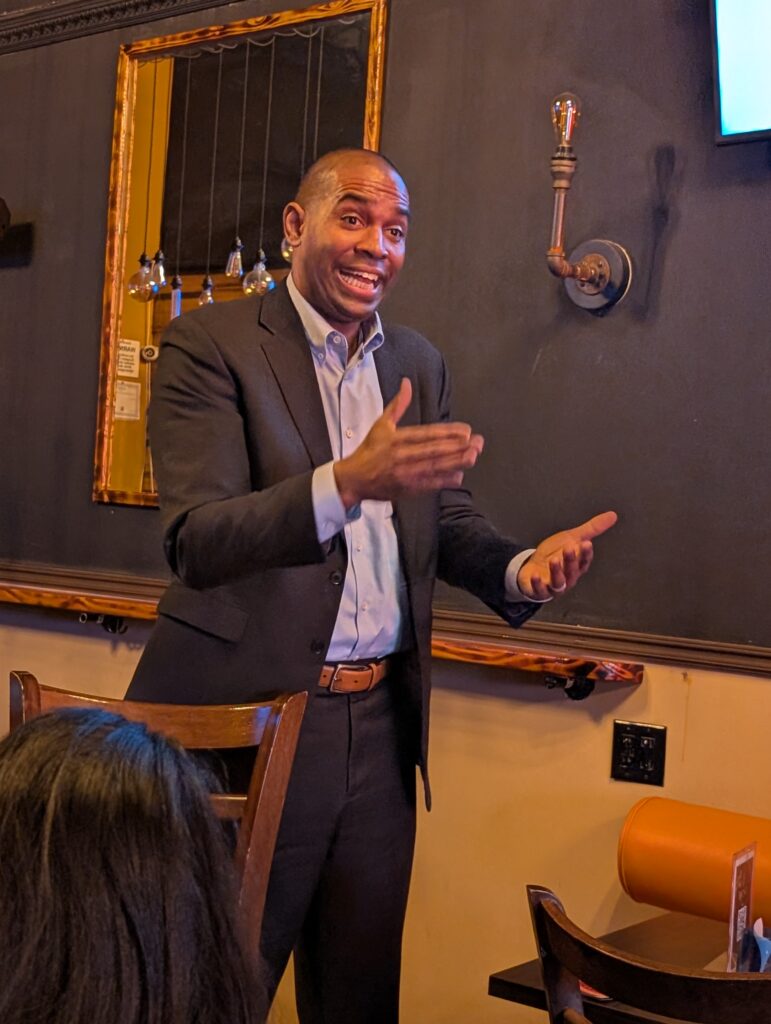
As someone who emphasized governing with communities rather than over them, Delgado stressed that the role of state leadership should be to remove obstacles—not become one. He emphasized the importance of partnerships among grassroots organizations, local leaders, and state officials to address challenges that cannot be resolved at the borough level alone.
One of the most resonant moments of the evening came when Delgado addressed New York State’s economic development spending—an estimated $11 billion annually—and the uncomfortable truth about where that money often goes.
According to Delgado, grant systems intended to close economic gaps frequently do the opposite. Often, the same well-connected organizations with established relationships and insider knowledge limit access, which leaves smaller, community-based groups out of the loop. Without meaningful metrics for success or return on investment, these programs risk becoming performative rather than transformative. He likened some initiatives, including MWBE certifications, to “window dressing”—programs that look good on paper but fail to deliver real, practical outcomes for the people they claim to support.

Delgado’s remarks on leadership struck a particularly personal tone. He reflected on how many well-intentioned leaders slowly drift from their purpose, choosing political survival over moral clarity. In contrast, he shared his own commitment to not holding power for power’s sake—but to use it boldly, even when it comes at a cost.
That moral framing, he noted, was how he previously connected with voters across ideological and demographic lines—even in districts that supported Donald Trump. Rather than speaking in partisan language, Delgado emphasized shared values: integrity, fairness, and the responsibility leaders have to model ethical behavior. A key portion of the discussion focused on campaign finance and political education. Delgado explained his refusal to accept corporate PAC money and why he chose to participate in New York State’s public matching funds program—making him the first statewide candidate to do so.
This system matches donations between $5 and $250 six-to-one, greatly increasing the power of everyday donors. A $25 contribution becomes $175. A $100 contribution becomes $700. The goal, Delgado emphasized, isn’t just funding—it’s freedom. Freedom from corporate influence. Freedom to govern with accountability to people, not special interests. Freedom to imagine a new model of leadership at the gubernatorial level—one backed by community power.
The evening closed with one of the most moving exchanges: a Bronx mother advocating for her non-verbal, disabled son and other vulnerable children aging out of support systems. She spoke candidly about caregiver burnout, lack of access to grants, and the absence of clear pathways for parents with solutions but no institutional backing.
Delgado responded with empathy and personal understanding, acknowledging the systemic gaps in behavioral services, caregiver support, and workforce shortages—particularly the inability to recruit and retain trained specialists who can afford to live in New York. He called for a more holistic, culturally competent approach to education, health, and family services—one that brings impacted parents and caregivers directly into policy conversations.
What made this Bronx event stand out wasn’t just the policy discussion—it was the honesty. From critiques of entrenched power structures to calls for moral leadership and people-first governance, the conversation reflected what many New Yorkers are craving right now: authenticity, accountability, and action rooted in lived experience.
Local businesses and organizations were highlighted as the room transitioned into a networking session, underscoring a final takeaway of the night: actual change occurs when community, policy, and purpose converge in the same room.
Related Articles: The Bronx Celebrates Sunny Hostin, SWV, and others Inducted to the 2023 Bronx Walk of Fame