

( ENSPIRE News ) Last Month, Bryson Tarbet Taught Elementary School Teachers at the Elementary Music Summit
ENSPIRE Contributor: Jack Rich
Teaching elementary school students is hard enough as is. Teaching music to elementary school students is even harder. Not only do you have to effectively teach them a new language and set of motor skills, but music programs are generally underfunded. Specific professional development for music teachers is therefore an essential part of this education, but one that is often overlooked. One company, and the man behind it, is trying to change this.
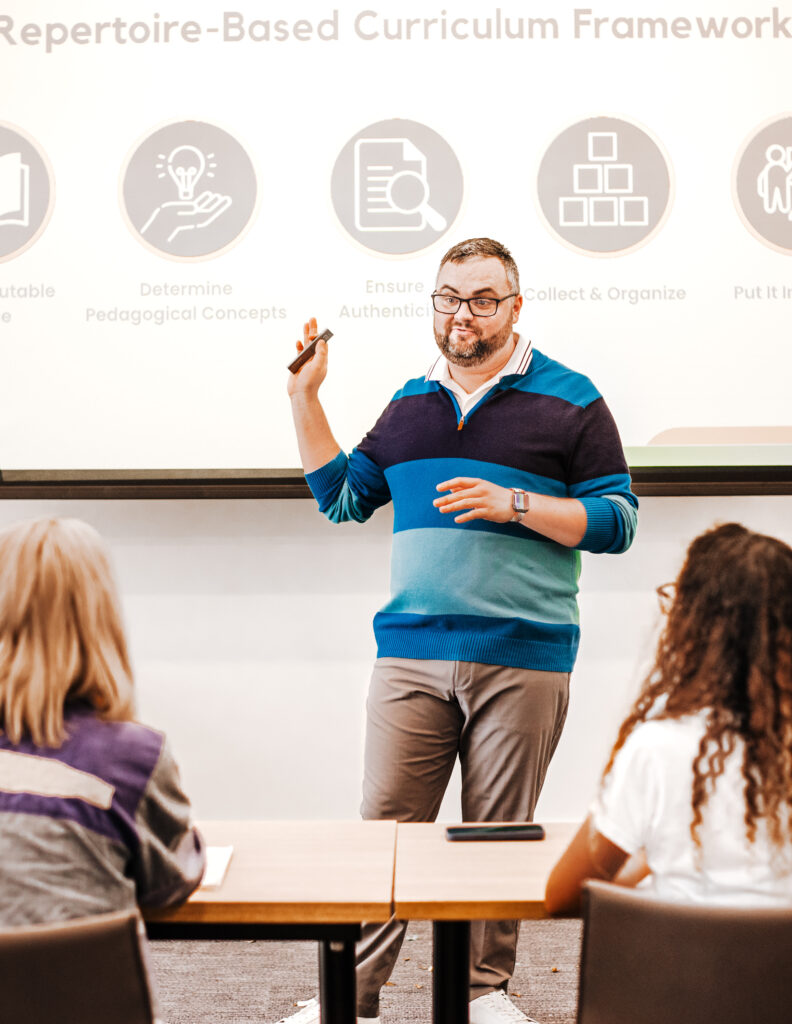
The company and man in question are called, respectively, ThatMusicTeacher and Bryson Tarbet. ThatMusicTeacher is a company that aims to help music teachers teach more effectively and comfortably. Bryson Tarbet is the head of this, and he goes nationwide to provide workshops to teachers and schools. Recently, Tarbet, through ThatOneMusic Teacher, organized the Fourth Annual Elementary Music Summit, which lasted from July 7th to the 11th, and was a free online conference that seemed to have been similar to the workshops put on by Tarbet. We were able to ask Tarbet questions about his experience with the Music Summit and his motivations for ThatMusicTeacher.
What inspired you to create the Elementary Music Summit?
The inspiration for the Elementary Music Summit came directly from my own experience as a music educator and the stories I heard from countless others. I realized there was a significant gap in our profession. Elementary music teachers are often given a classroom with very little guidance on how to meet the unique needs of their students and navigate the complexities of their role.
Undergraduate programs, while valuable, often don’t provide the specialized training needed for a K-5 music classroom, which is a very different environment from a high school band or choir. To make matters worse, once they start their careers, these teachers are frequently isolated. They might be the only music teacher in their building, and their school districts often lack the resources to provide content-specific professional development.
I saw a problem where dedicated teachers were spending countless hours and their own money trying to fill these gaps. They were on a perpetual quest for answers to questions they didn’t even know they had yet—like how to manage a classroom of 30 second graders or how to effectively teach rhythm to first graders. This constant struggle leads to burnout and can negatively impact the quality of music education students receive.
The Elementary Music Summit was created to be the solution to that problem. It’s a free, accessible, and high-quality resource that provides these teachers with the tools, strategies, and a supportive community they need to feel confident, inspired, and prepared to create truly joyful and impactful music classrooms.
What do you love about music and teaching it?
What I love about music is how it connects us. It’s a universal language that can express joy, sadness, and everything in between. As a neurodiverse individual, music was and still is a powerful way for me to process and communicate emotions in a way that words sometimes can’t.
But what I truly love is teaching it, especially to elementary students. There’s nothing more fulfilling than seeing a child’s eyes light up when they finally understand a tricky rhythm, or when they feel the pure joy of creating music with their classmates. It’s about empowering them to find their own voice and discover a part of themselves they didn’t know was there.
I’m particularly passionate about making music accessible and joyful for every child. As an instructional coach and a music teacher, I’ve seen firsthand how a supportive and inclusive music classroom can be a safe space for students to learn, grow, and simply be themselves. That’s the real magic of teaching music—it’s not just about the notes on the page; it’s about building confidence, fostering community, and giving every child the chance to experience the power and beauty of music.
Are you satisfied with the success of your programming, or are there things you would like to change about it?
We’re extremely satisfied with the success of the fourth-annual Elementary Music Summit®. The feedback from our attendees has been overwhelmingly positive, and the engagement we saw in the community was fantastic. The summit’s success lies in its direct, positive impact on teachers who tell us they feel more energized and better equipped to go back to their classrooms. However, we’re always looking for ways to improve because our mission is to empower these incredible educators to make a lasting difference. We believe in continuous learning, and that applies to the summit itself. We’re always seeking feedback to refine our content, enhance the attendee experience, and expand our reach to ensure every elementary music teacher knows this free professional development resource exists for them. Our goal is to create an even larger impact with each event we host.
What do you do to help the teachers you speak with?
I help teachers by providing them with the knowledge, resources, and support they need to create inclusive, equitable, and engaging music classrooms. My work is built on three core values. First, Inclusivity Matters. Drawing from my personal experience, I provide teachers with practical strategies for creating welcoming and accessible classrooms for students of all abilities and backgrounds. Second, Community Empowerment Matters. I work to build strong networks for music educators through events like the Elementary Music Summit®, helping to combat isolation and create a supportive space for collaboration. Finally, Advocacy Matters. I am a passionate advocate for music education, and I provide teachers with the resources and confidence they need to advocate for their programs, demonstrating the essential value of music in a well-rounded education.
What is one piece of advice you would give to someone who wants to teach?
The single most important piece of advice I can give is this: focus on building relationships with your students first and foremost.
The curriculum, the lesson plans, and the techniques are all vital, but they are built on a foundation of trust. Take the time to get to know your students as individuals—learn their names, their interests, and what makes them unique. By meeting them where they are and creating a classroom where they feel seen, heard, and safe, you build a space where they are ready and willing to learn. When a student knows you care about them as a person, they will be more open to what you have to teach. This is what truly makes a classroom successful and allows you to create a lasting impact.
Tarbet is doing the work no one thinks about: he’s teaching the teachers. Whether through the Elementary Music Summit or through his year-round workshops, he’s trying to make the world a better place through teaching his passion. He reminds us that one of the best ways for us to create a better world is by doing what we care about and helping those we can.
Related Articles: Bryson Tarbet Champions Accessibility in Music Education for Sensory Processing Disorder and ADHD, Music in Our Schools Month Highlights Importance of Music Education Amidst Federal Funding Uncertainty