
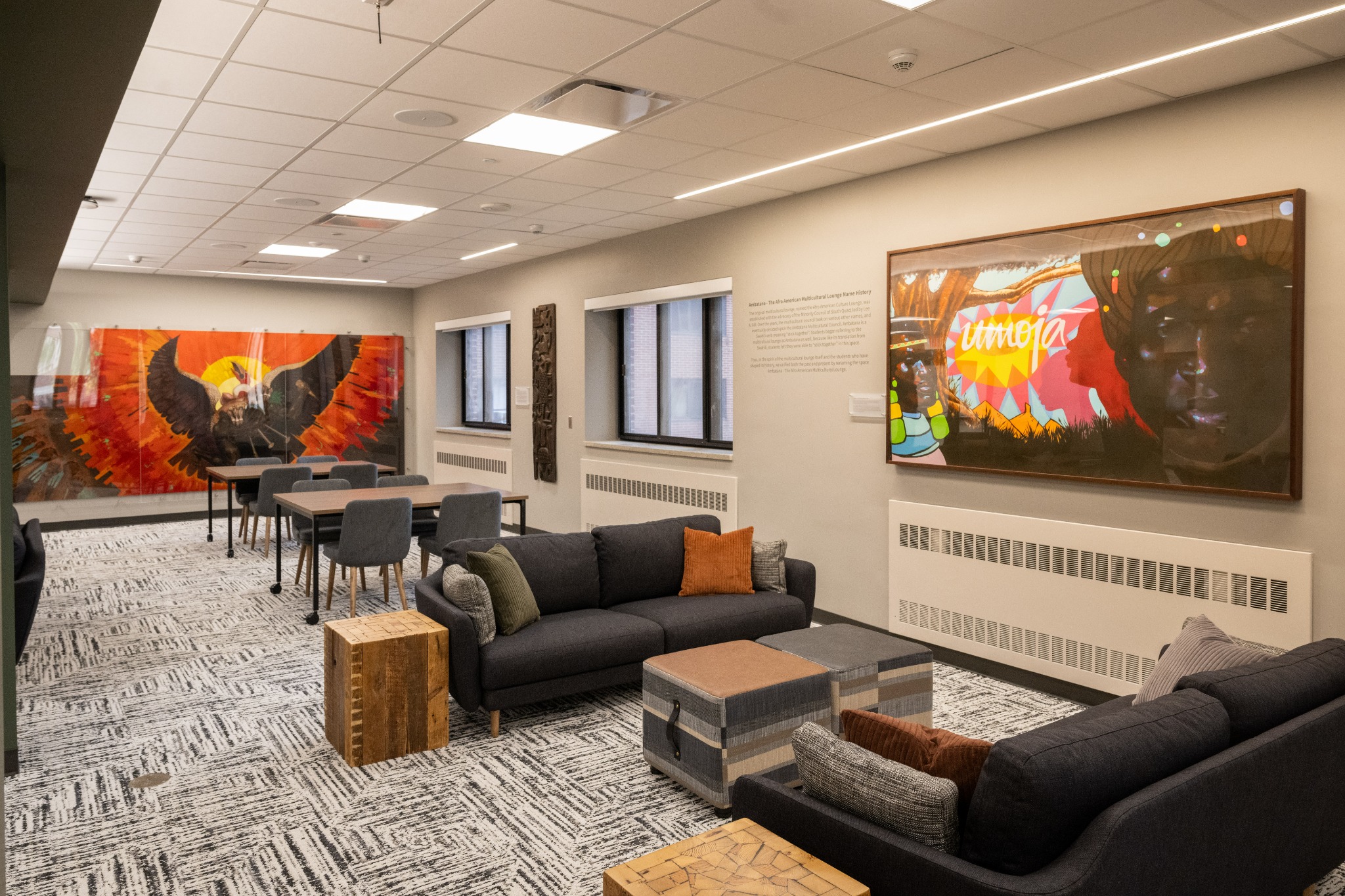
( ENSPIRE Community Spotlight ) The “Ambatana” Earned First Place from the Association of University Interior Designers 2025 Award
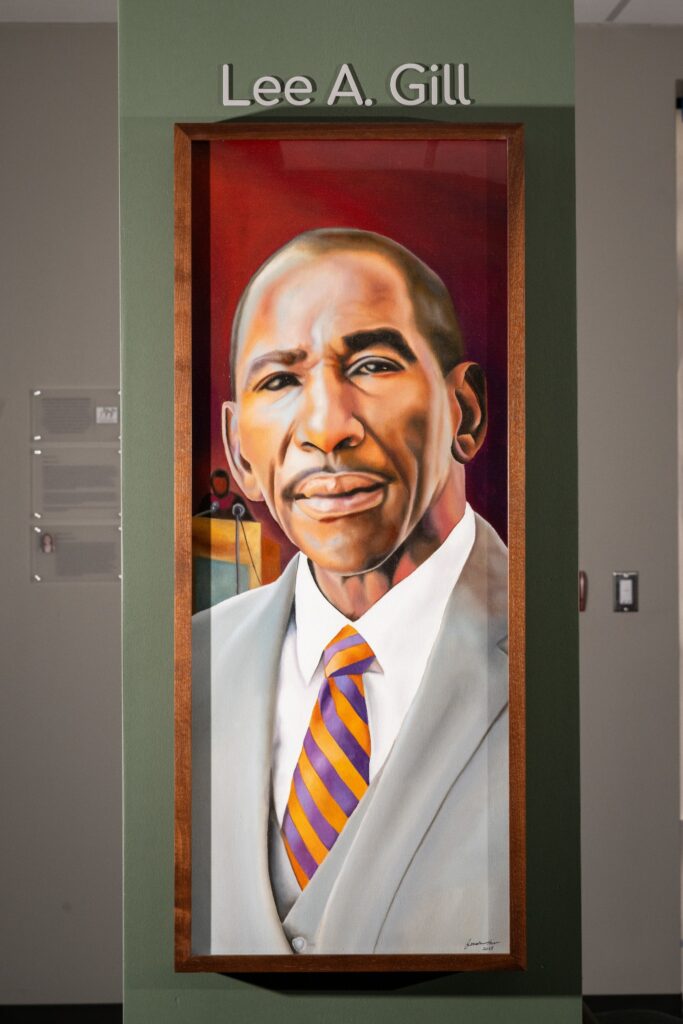
Lee A. Gill, J.D., was a student leader at the University of Michigan in the early 1970s. He played a crucial role in advocating for the creation of Ambatana. A nationally respected higher education leader whose career spanned more than five decades across major research universities. The Ambatana is an Afro-American Multicultural Lounge established in 1972 following the first Black Action Movement. The Ambtana’s design was intended to reflect African American culture and history, as well as the student voice.
Recently, Ambatana received first-place recognition from the Association of University Interior Designers 2025 awards ceremony for its 2024 renovation in the projects under 5,000 square feet category. The award highlights the project’s design excellence, cultural expression, and engagement with student life. The award also honors the foundational advocacy efforts that helped bring Ambatana into existence in the South Quad Residence Hall.
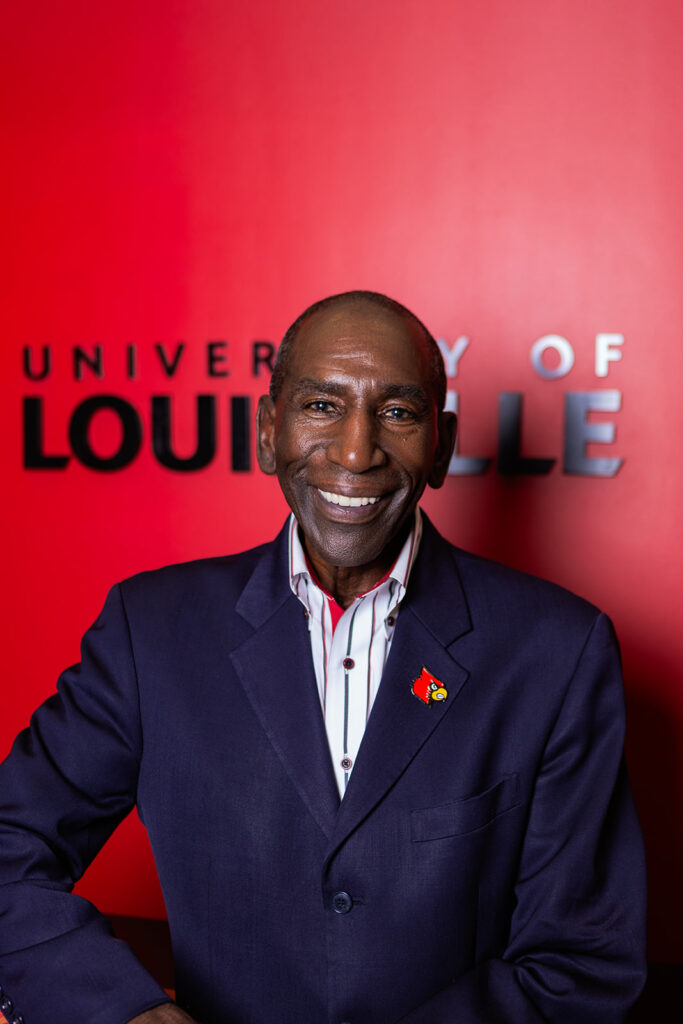
According to Gill, “Ambatana has always represented more than a physical space. It stands as a testament to student voice, cultural recognition, and the power of advocacy to create lasting institutional change.” Gill recently served as Vice President for Access and Opportunity at the University of Louisville, where he was a member of the President’s Cabinet. He is now retired from full-time university administration and currently advises higher education leaders on institutional strategy and enrollment sustainability. Through advancing college pathway initiatives designed to strengthen student success, Gill’s ambition and advocacy still shine through.
University officials stated that the collaboration among Gill, Housing and Student Life Facilities, the Community Connections and Engagement department, and Student Life Capital Projects made the Ambatana Lounge possible. A few of his accolades include having senior executive roles at multiple research universities and receiving the National Diversity Visionary Award from “Insight Into Diversity Magazine.” Gill shares his experience advocating for the creation of Ambatana, his strategy for maintaining it for so long, wisdom for younger generations to advocate and build spaces that last a lifetime, and the benefits and cultural response to the student bodies’ overall health based on well-thought-out designs for campus spaces.
Looking back, what was the spark or moment that convinced you that advocating for the creation of Ambatana was essential for the Black student experience?
It was a sign of the times. Coming out of campus unrest, the war, the BAM strike, and the early 1970s, college campuses and the country more broadly were experiencing profound social change, yet institutions were slow to respond. At the University of Michigan, Black student enrollment was around 3% of the student body of more than 40,000. It was entirely possible to attend classes all week without encountering another Black student. That level of isolation was not accidental; it was structural.
Our original advocacy focused on creating what would now be called Living and Learning Communities. These communities would be open to all students but centered on the experiences of African American students. The goal was to foster belonging through culturally grounded programming, engagement, and connection. When the Board of Regents rejected that proposal, citing concerns about discrimination, we shifted strategy rather than backing away.
That pivot led to the Ambatana multicultural Lounge, a space designed not as an exclusive environment but as an intentional place for education, celebration, and cross-cultural dialogue. At a time when Black student experiences were often overlooked, the space affirmed visibility, dignity, and belonging while also educating others. The decision by University of Michigan Housing leadership and Student Life to expand these multicultural lounges into other residence halls over the years, highlighting the histories of different ethnic groups, women, races, and gender identities, is to be applauded.
Institutional momentum can shift over time. How do you ensure that cultural spaces like Ambatana remain enduring ethical commitments rather than temporary responses to activism?
Sustainability requires moving beyond personalities and embedding initiatives into institutional structures. In higher education, too many efforts depend on individual champions. When those individuals leave, the initiatives often disappear with them.
The most effective tool for longevity is strategic planning. When equity-driven initiatives are written into an institution’s strategic plan, they influence funding, accountability, and long-term priorities. Budgets follow plans, and plans reflect values.
My mentor, Dr. Jon Lockard, often emphasized that lasting change occurs when initiatives become part of how an institution operates rather than special projects on the margins. Cultural spaces endure when they are treated as ethical commitments aligned with mission, leadership, and sustained investment.
Seeing a space you championed 50 years ago win a national award today is a rare full-circle moment. How can current student leaders design initiatives that are built to last for half a century?
There are many reasons why it may not seem possible in today’s political and social climate. However, I firmly believe in the human spirit and in social justice, and while it may be more challenging today, it is still possible. The current environment is faster, more polarized, and often less patient with long-term thinking. That reality makes intentional design more important than ever and calls for initiatives rooted in fundamental human needs such as belonging, dignity, and opportunity, which transcend generations.
Student leaders must think strategically and build governance structures that include strong succession planning, ensuring that each administration maintains continuity of effort over time. Sustained initiatives require long-term focus, not short-term momentum.
The strongest initiatives cultivate shared ownership among faculty, staff, and administrators while keeping student leadership central. They clearly document their purpose, regularly assess their impact, and evolve as conditions change without losing their core values. Sustainability is not about permanence. It is about maintaining relevance over time.
As we look at modern campus challenges, how does culturally responsive design support the mental health and academic success of today’s diverse student body?
Culturally responsive design recognizes that students arrive on campus with identities, histories, and lived experiences that shape how they learn and engage. When institutions intentionally reflect those experiences in spaces, programming, and curricula, students feel seen and valued.
That sense of belonging supports mental health by reducing stress, building resilience, and encouraging students to seek support when needed. Academically, students are more engaged and persistent when they are not expending emotional energy navigating environments that feel alien or unwelcoming.
Culturally responsive design is not about accommodation. It is about equity and effectiveness. It creates environments where students can bring their whole selves into the learning process, strengthening both individual success and the broader campus community.
As Gill reflects on Ambatana’s national recognition, he sees it not as a culmination but as confirmation that thoughtfully designed initiatives can endure across generations. Now returning to the South Bend area to be closer to family and longtime colleagues, he is focused on strengthening the pathway from high school graduation to college access and long-term academic success. Inspired in part by elements of Geoffrey Canada’s Harlem Children’s Zone model, Gill believes that comprehensive, community-based strategies can be thoughtfully adapted to smaller markets, particularly in communities supported by strong anchor institutions such as the University of Notre Dame and Indiana University South Bend. For him, the work remains consistent: design systems that affirm dignity, expand opportunity, and create lasting impact.
Lee Gill is a leadership strategist and executive advisor focused on executive coaching, strategic planning, and strengthening pathways to college access and long-term student success. You can connect with Lee Gill on LinkedIn and at stratusgroupconsultantsinc.com/.
The Ambatana is a legacy in action, showing that a vision planted decades ago can still shape opportunities and impact future generations. In 2024, the updated lounge integrates contemporary design with original artwork by Detroit-based artists specifically selected for the space. It is a place of cultural affirmation and belonging for generations of students.
In addition, the university’s CAMEO Multicultural Lounge in Couzens Hall received second place, which affirms the institution’s leadership in culturally responsive campus design. With Ambatana’s legacy continuing on with the updated lounge, Gill states, “To see Ambatana continue to evolve while remaining true to its roots is incredibly meaningful. This recognition validates the vision that began more than 50 years ago and confirms its importance for today’s students and those still to come.”
Related Articles: Mathew Knowles Joins Prairie View A&M University as Executive-in-Residence, Black Influencer Weekend Shines a Light on Multicultural Creators