
( ENSPIRE She Did That ) Knobloch Takes Inspiration From The American Southwest In Taos For Her Book
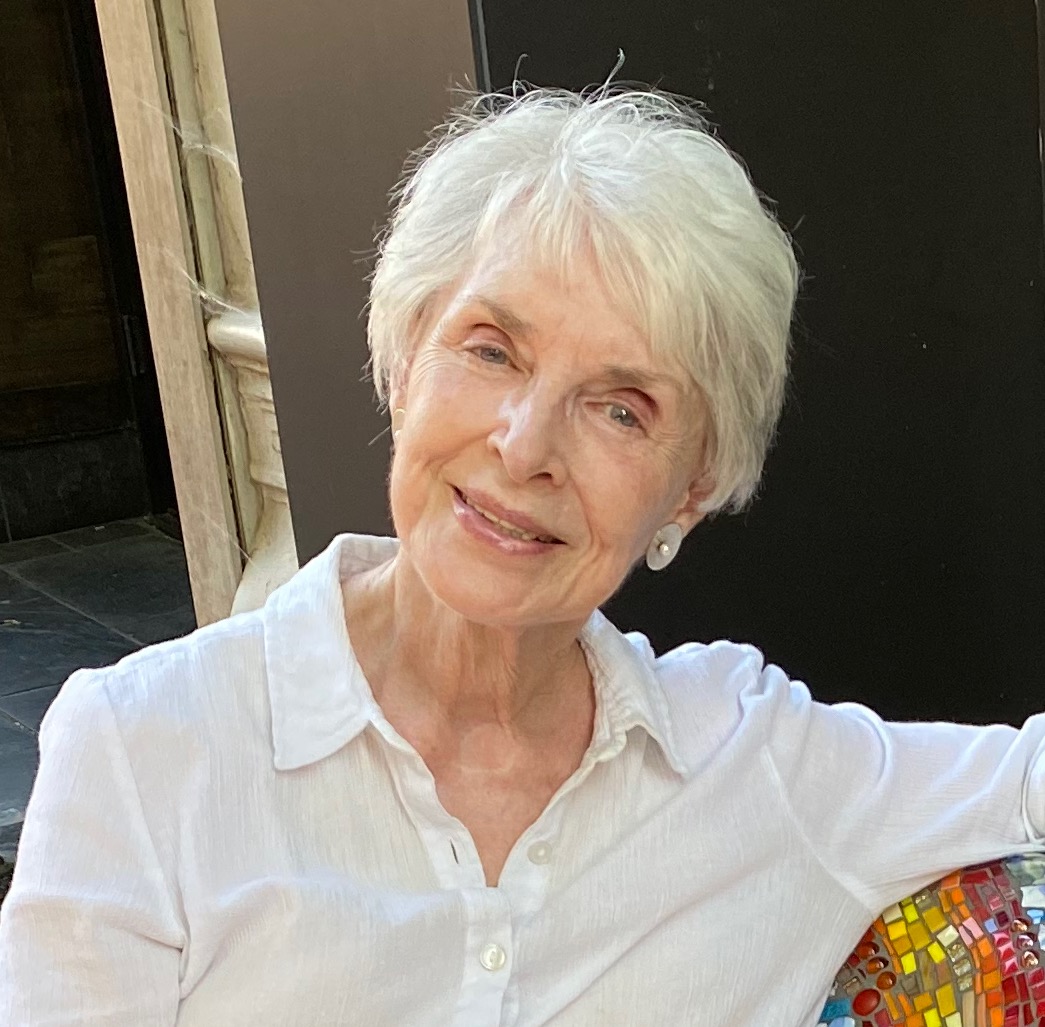
For Marta Knobloch at the blossoming age of 86, most consider their story written, but the poet has been starting a new chapter of their life, each more distinct than the last. From her experience as an ‘army brat’ attending multi-ethnic schools as a teen in Hawaii during a time of continued segregation to immersing herself in the civil rights movement, Knobloch has faced change and observed the intersection of culture and community. However, it was the solitude of the American Southwest in Taos, New Mexico, that gave her a new framework. Following the death of her husband, Knobloch has embraced the silence of the desert as the catalyst for her next written work, helping process her grief. Her latest collection, “Absorb This Silence: High Desert Haiku,” serves as a meditative read on transformation and a testament to the fact that, no matter one’s age, one’s journey can continue into the unknown.
Knobloch attended the College of Notre Dame, now Notre Dame of Maryland University. She writes haiku and lyric poetry, with four award-winning collections under her belt that resonate with many readers. Her writing career includes ecological fables for young people, plays, essays, and critical reviews; her voice is evident across different outlets. She has also edited and contributed to literary journals and anthologies in the United States. During her work as a poet, she met three inspirational mentors. Knobloch studied with Sister Maura Eichner, a noted Catholic poet. She also met his sojourn, which influenced Dr. Regina Soria, an art historian knighted by the Italian government who wrote the definitive biography of Elihu Vedder, the American painter in Italy. Lastly, Josephine Jacobsen, a renowned mentor to Knobloch, was the Poetry Consultant to the Library of Congress and is now the Poet Laureate. These three creative women had an impact on Knobloch’s life and poetry. For a time, Knobloch lived in Bloomsbury while researching the life and work of the English poet Lawrence Hope in the British Library’s iconic Reading Room. Knobloch’s powerful poetry got her an invitation to Fondazione Il Fiore in Florence, Italy, where she later lived in Rome and Ferrara.
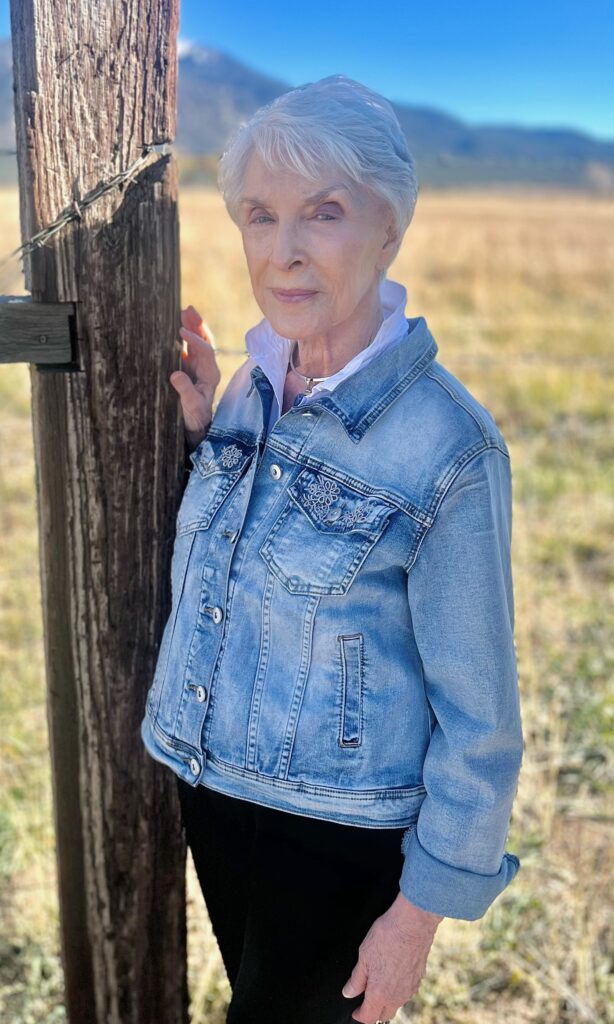
After the death of her husband, she came to the American Southwest to research family history. The solitude and silence in the area were the start of consolation and peace. Absorb This Silence” celebrates the American Southwest, the solitary lifestyle and community found there. The poems in her latest publication offer a spiritual journey shaped by silence, desert light, and long horizons. Each haiku brings a moment of stillness through imagery inspired by the land and life, honoring a landscape that is both severe and luminous.
When you found yourself facing the loss of your husband, how did your history of navigating constant change – such as moving from place to place growing up – influence your decision to travel to Taos, and how did this decision impact the framework of the next chapter in your life?
Growing up in the military, I had moved repeatedly, leaving a place that had become familiar and learning to make new friends and adapt to new schools. When my husband died, I found myself, once more, on the verge of change. Familiarity with disruption did not make grief easier, but it gave me confidence that exploring new horizons could lead to accepting a new chapter in my life. Coming to the high desert of the American Southwest, I found the space, silence, and solitude that allowed me to grieve and also to endure.
How did the specific landscape, silence, and solitude of the desert act as a companion in your process of grief, and how did the environment force your poetry to be written as haiku specifically?
In Taos, the desert is a presence; an austere companion. Solitude in the desert removes distraction. In that deep silence, I felt no pressure to resolve my loss. I only needed to bear witness to the cloudless sky, the encircling horizon, the kindling and dimming of the day. Grief in that vastness became elemental like heat or light or wind.
Writing about the desert demands accuracy and restraint. The form of haiku mirrors the desert’s minimalist landscape. Haiku rewards attentiveness to the present moment and an instinctive response to what remains unsaid. Haiku celebrates a single moment without forcing it into meaning: a shadow sculpting a boulder, wind riffling through junipers, shifting light that seems to echo an inner change. It does not try to explain what cannot be explained.
How do you see the influence of your mentor trio – Sister Maura Eichner, Dr. Regina Soria, and Josephine Jacobsen in your work today?
I learned reverence for language from Sister Maura. She taught me to bring intense attention and a quest for clarity to my word choice when crafting a poem. I came to believe that each word needed to earn its place, and silence is as important as sound. I still ask myself when I write, “Is this true? Is this necessary?” The acute awareness she practiced continues to guide me, particularly in the distilled form of haiku.
Dr. Regina Soria inspired me through her example of intellectual rigor and her deep respect for the vocation of writing. She motivated me to question, to revise, and not to be easily satisfied with work that appeared to be successfully completed. She convinced me that striving for excellence through modifying and editing a poem is a form of precision that respects the poem and the reader.
There is a fearlessness in Josephine Jacobsen’s poetry, a willingness to face difficult truths and dwell in uncertainty, that is the essence of moral courage. She encouraged me to write openly and honestly about my own doubts and failings. She permitted me to trust my own voice.
The friendship and guidance of Sister Maura Eichner, Dr. Regina Soria, and Josephine Jacobsen had an extraordinary impact on my work and my life. These three remarkable women gave me the precepts that form the foundation of my writing: attention, discipline, and authenticity and transparency in writing.
How does your interest in different cultures, coupled with your experience in a multi-ethnic school in Hawaii, reveal how the tradition of the Southwest, which you wrote about in “Absorb This Silence,” connects to the social and cultural work you experienced earlier in your career?
My early introduction to different cultures shaped how I see the world. Attending a multi-ethnic school in Hawaii exposed me to a mosaic of languages and customs. I learned that no single perspective holds the whole truth, but meaning is found in what is shared respectfully across differences. My experiences in diverse cultures taught me to observe and to honor what is not mine to interpret.
The traditions in the American Southwest, particularly in Taos, are ancient and deeply rooted in place. As in Hawaii, there is a reverence for what endures, and an understanding that identity is indivisible from landscape. The natural world is not separate from daily life but closely interwoven with it. In writing the haiku for “Absorb This Silence”, I hoped to capture a moment where the visible and the invisible meet, where the transcendent is rooted in the ordinary. And to commemorate, not only the desert itself, but the long human presence that gives it meaning.
How does your experience of publishing now differ from how you might have approached it in earlier years, and what does “Absorb This Silence” represent for you in your current chapter in life?
As a younger woman, I approached publishing with the desire to build a body of work and to establish a voice within the larger literary community. Now I am less concerned with recognition and more attuned to validity. The question is no longer, “How will my work be received?” but “Is what I write true to the life I have lived?”
The poems in “Absorb This Silence” are pared down to their essence. They reflect not only the landscape of the American Southwest but also an inner landscape that has grown more spacious and perhaps more accepting of what cannot be resolved. The book feels to me like a gesture of trust. Trust in the form of a haiku to carry meaning without explanation. And trust in the reader to let the work define itself.
Marta Knobloch has left an impression through all her writing throughout her career. She has written plays, essays, and critical reviews, as well as ecological fables for youth. She has also edited and contributed to literary journals and anthologies in the United States, drawing on her expertise. Not to mention the research on the life and work of the English poet Lawrence Hope, at the British Library’s iconic Reading Room. Through her mentors and writing journeys, she was invited to be a visiting poet at the Fondazione ILFiore in Florence, Italy. Her strength in storytelling is evident in her upcoming poems in “Absorb the Silence.” Knobloch inspires vulnerability through landscape imagery that resonates with audiences who appreciate the details and evoke a sense of starting anew after loss.
Related Articles: Luivette Resto Releases Her New Third Book of Poetry, Nick Courmon Brings “For the Love of” Poetry