( ENSPIRE Community Spotlight ) After Years of Medical Dismissal Left her in a Wheelchair, Samantha Sloves Shares her Story of Battling Lyme Disease
ENSPIRE Contributor: Violet Tong
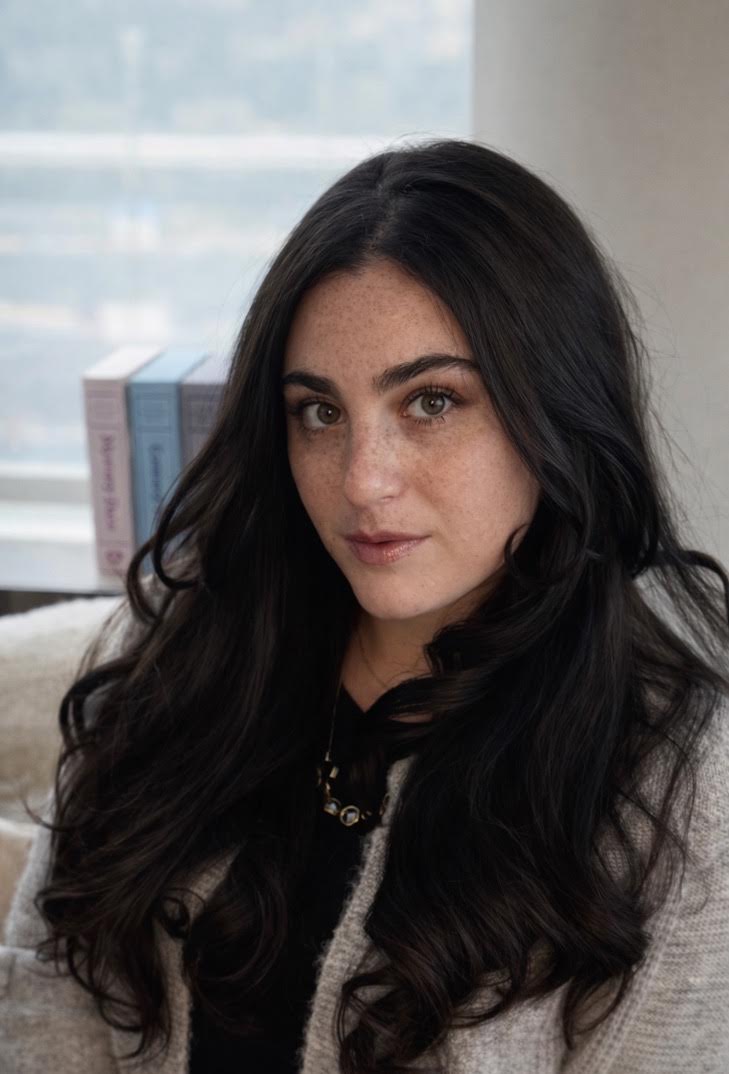
At 14 years old, Samantha Sloves should have been thinking about high school dances, weekend plans, and college dreams. Instead, she was learning how to navigate the challenges that came with Lyme disease. What began as a tick bite spiraled into years of medical uncertainty. Today, she has regained the ability to walk and transformed her experience into a mission to help others.
Despite receiving an early Lyme disease diagnosis, subsequent specialists dismissed it. Samantha was on a two-and-a-half-year medical odyssey that included nearly 100 physicians, more than 40 hospitals, and countless invasive procedures. Disability Pride Month acknowledges the diversity of people living with disabilities while advocating for accessibility and inclusion. Samantha’s story challenges one of society’s biggest misconceptions: that disability is defined by what people can see. The fact is that a disability is not always visible or permanent.

In 2023, Samantha founded My Lyme Coach. It is a concierge-style coaching service that helps people newly diagnosed with Lyme disease navigate common challenges. Samantha helps patients become active participants in their own care. Her philosophy is simple: “I am not a guru with a miracle cure. I am the GPS. I help you become the CEO of your own case so you stop wandering in the dark.” Samantha describes her work as giving patients structure during one of the most chaotic periods of their lives. Rather than replacing medical expertise, she helps people advocate effectively within the healthcare system.
What inspired you to create My Lyme Coach?
I created My Lyme Coach because there was nothing there for me when my life changed at 14 years old from one tick bite. Some organizations could hand you a list of doctors, and thank God for them, but there was nothing that actually held your hand through the whole thing. No one who connected the dots. No one who could sit with you inside the fear and say, out loud, I have been exactly where you are.
I could not do a single thing I had done just a few weeks before, and only months earlier I had been doing everything I wanted and more. I got sick like you, I got dismissed like you, and I got better, and you will too. When you are 14 and your body has taken everything from you, and every appointment ends in a shrug, that one sentence is what you are starving to hear, and no one was saying it to me.
So I became the person I needed (and never had) as a teenager dealing with Lyme disease. The one who makes sure every doctor is actually talking to every other doctor. The one person who reads your whole history and connects the dots instead of glancing at one organ and sending you home. And here is the part that still gives me chills: I have had full-circle moments where people who once helped me are now people I help. I will never get over that. It is a pinch-me feeling every single time, and it is proof that the worst thing that ever happened to me became the thing I was put here to do.
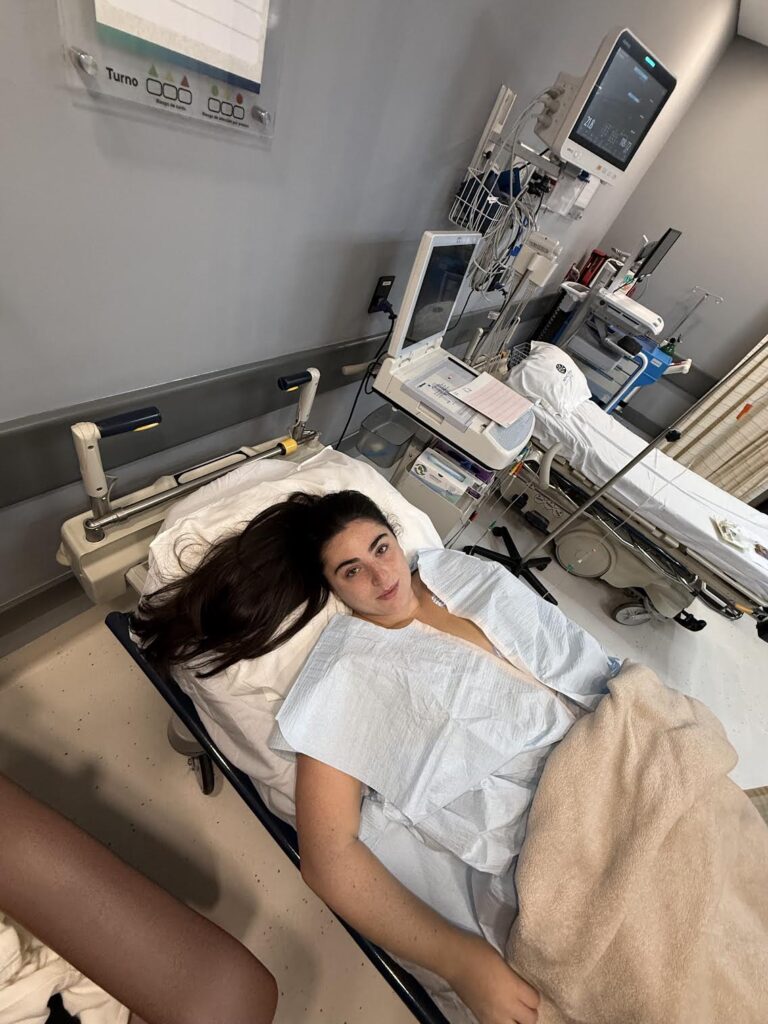
Lyme disease, caused by the bacterium Borrelia Burgdorferi and transmitted through infected black-legged ticks, affects hundreds of thousands of Americans every year. According to the Centers for Disease Control and Prevention (CDC), approximately 476,000 Americans are diagnosed and treated annually. When caught early, Lyme disease is often successfully treated with antibiotics. But delayed diagnosis or untreated infections can have serious consequences. Research suggests that roughly 10–20% of untreated Lyme disease cases develop persistent neurological symptoms, and in difficult situations, mobility may become significantly impaired. For Samantha, those statistics became reality.
What were your very first symptoms of Lyme disease, and when did you realize something was seriously wrong?
I was 14, sitting for the New York State tests, when I woke up covered in hives and had no idea why. From there it was one strange thing after another. I became so intolerant to heat that I would sweat through my clothes, and my mom started bribing me with Carvel just to get me to make it through a day of school. I carried a fan with me everywhere.
The light was even worse. I had such bad photo sensitivity that I could not sit in a classroom with the lights on, and even the dim lights of my old school building drove me out of my mind. I started wearing my Ray-Bans inside like something was wrong with me, because something was wrong with me. I stopped watching TV. I lost all my Snapchat streaks, which at the time honestly felt like the end of the world. And then there was my locker. I had known that combination for eight years, and suddenly I would stand there twisting and twisting, and nothing would open, like I was being asked to recite pi.
Having to go to the teacher who kept everyone’s combinations was the most humiliating thing I could imagine at the time. I had no idea that a few months later a male nurse would be helping me on and off a bedpan, and that my locker would become the very least of my worries.
The moment I truly knew something was seriously wrong, was the day I walked from my bedroom toward the bathroom and my leg started to shake and wobble underneath me. I had to grab the wall to stay standing. I could not make it across my own hallway without holding on. It was terrifying. I did not tell anyone right away, I think because saying it out loud would make it real, but slowly I had no choice, because it got too obvious to hide. Your body forces the truth out of you eventually.
What would you like doctors and healthcare professionals to better understand about patients with chronic illnesses like Lyme disease? What gap in the healthcare system do you feel needs to be filled?
I need doctors to be very, very slow to dismiss a patient, because dismissing someone does extreme harm that lasts long after they leave your office. Telling a 14-year-old that her tests are normal, or that she will never walk again, or that she is dying, at the exact age when she is trying to figure out who she is, is one of the most terrifying and traumatic things you can do to a person.
When you slap a mental-health label on someone just because you cannot figure out what is wrong, you do real, permanent damage to how they trust themselves for the rest of their life. Even when you do not have the answer, telling a patient I do not know yet, but I am not giving up on you, is everything.
The gap is that no one is looking at the whole person. You go to the gastroenterologist and they look at your stomach. You go to the cardiologist, and they look at your heart. Nobody steps back to see the entire picture, and nobody asks who this patient actually is, so they can match the treatment to the human in front of them instead of the multiple-choice answer that insurance happens to cover.
Care should be about the best interest of the person, not the funding of the hospital or the bottom line of the doctor. To be clear, I am not a doctor and I would never pretend to be one. What I do is make sure the whole picture actually gets looked at by all healthcare providers. I push the doctors to think critically, to weigh every possibility instead of only the one thing that falls inside their specialty. I became the person I never had as a teenager, the one person in the room making sure nothing falls through the cracks.
You saw nearly 100 physicians over two and a half years. What was the most difficult part of that experience? What can you tell someone going through the diagnosis of Lyme disease for the first time that you wish you had known?
The hardest part was being made to feel like I was the problem. I will never forget a respectable, well-known doctor looking at me while I sat in that black wheelchair, a chair I physically could not get out of, and asking me, with a completely straight face, to do a jumping jack. She was insinuating that I could, that I was fine, that I was putting all of this on.
It sounds like something out of a movie about abuse, and I still do not know how to fully explain the damage a single moment like that does to a person. There is no coming back from it. To this day, I cannot walk into a gym or watch people jumping up and down without thinking about it. When doctor after doctor cannot help you, you start carrying their failure like it is your fault, and that shame is heavier than any symptom.
So here is what I wish someone had told me, and I want to be clear this is not medical advice, it is just the truth: do not take the first diagnosis as the only one that can be true. If something does not feel right, it probably is not right.
Do your research. Use AI. Use every resource you have. Go into your appointments prepared with questions to ask your doctor. Walk in with the three things that scare you the most, the ones keeping you up at night, and track small changes that never would have happened before you got sick. For me, that was needing sunglasses inside and forgetting a locker combination I had known for eight years. Those are not quirks; they are signs, so do not let them pass you by, because they can be the difference between a diagnosis and a dismissal.
Keep your own records and track your own timeline, because those patterns are how you crack the case. I still do this. Just recently my boyfriend was scratching the left side of my back and I could not feel it, but I felt it on the right, and that is exactly the kind of small, strange thing worth writing down. You may feel like a burden for pushing the doctors. Push anyway. You know yourself better than any doctor who spends five minutes with you, and advocating might be the one thing that saves you from a lifetime of symptoms.
Did living in a wheelchair due to Lyme disease change the way you saw yourself and/or the way you felt the world saw you?
Yes, completely, because the moment I was in that chair the world started treating me like a different person. People talked louder at me, as if the wheelchair had somehow affected my hearing. I had never once noticed how inaccessible the world is until I could not stand up in it. Suddenly there were bathrooms I had used my whole life that I could not get into. To this day, years later, I cannot walk into a restaurant or a friend’s house or check into a hotel on vacation without instantly scanning the room and thinking, how would I get through here if I were still in the chair. I am almost obsessive about it now, because I lived it for so long.
Before I got sick, I never once gave any of this a second thought. I never noticed the cars parked in handicap spots without stickers. I never once thought about who could and could not get through a door. I was ignorant of all of it, and I carry real guilt over that. Then suddenly, the only way into a place was the freight elevator on the side of the building, the one that hauls all the food and supplies a restaurant runs on, or some back entrance where I had to sit and wait while my family figured out how to get me inside.
Everything should be accessible, and the harsh truth is that it simply is not. I cannot un-see any of it now, and I am still learning to give myself grace, because noticing the world this way is not a flaw. It is the cost of surviving something most people never have to imagine.
Looking back, what kept you going during the days when everything felt uncertain? Was there a person, a belief, or even a small moment that helped you hold on while battling Lyme disease?
A few things carried me through this difficult period: my grandparents, my family, and my future, more than anything. I held on to graduating. I held on to the version of my life that had to exist on the other side of all of this. And honestly, some of my fiercest fuel came from every single person who told me no. Every time someone told me I would never walk again, never go to high school, never graduate, never have a normal life, something in me lit up and said, watch me. Their doubt became my motivation to show them exactly who I really was.
And then there was my Poppy. My grandfather asked me the same question almost every single day: Is the book done yet? He was not nagging me. He was reminding me, in his own quiet way, that he knew I had something to give this world, and he was not going to let me forget it just because of Lyme disease. He never once treated me like I was broken.
He saw me as whole when I could not see it in myself, and on the days I had nothing left, I borrowed his belief until I could find my own again. He did not live to see me finish it, and the book is still coming, still being written, because my story is far from over. But I promise you it is on its way, and every single person I help is part of his legacy too. He knew this was coming before I did.
What did living with a disability reveal to you about how society views people with disabilities? Do you think it is different or overlooked?
People think that someone with a disability is done. Finished. They talk louder at you, they look at you differently, they decide all sorts of things about you that simply are not true. A person’s worth in this world is quietly measured by how productive and how normal they look, and I felt that shift the instant I had a visible mobility device.
People either pity you, or talk to you like a child, or look right through you as if you are not there, and not one of those reactions actually sees the human being in front of them. Nothing about me had changed on the inside. Just because I was not the fun friend anymore did not mean I was not still me.
The friendships were the part that broke my heart. The people I thought were my friends turned out not to be true friends. You go from talking and texting every day, doing homework together, and having sleepovers every weekend, to them vanishing the moment you cannot do those things anymore.
Are they really your friends if that is all it takes? I would be lying if I said I was not resentful, and honestly, more than a decade later, I still do not talk to a lot of them. You can say I held a grudge, you can say I could have handled it better, but I would like to believe that if the roles were reversed, I never would have given up on someone that fast.
The most ironic part is that the boys I grew up with showed up for me far more than the girls did, and I will be grateful forever for the handful of friends who never gave up on me. I did not want a fundraiser, and I did not want to be someone’s college essay or their pity project. I was still Samantha.
This is not me playing the victim, because that is not how I see myself. It is me telling the truth: people mistreated me, I did not deserve it, and when your terrified family is the only support you have left, you need your friends to show up. My hope is that we start showing up for people the first time they say I do not feel good.
You have spoken about feeling “invisible.” Can you explain what that looked like in your daily life?
I felt invisible almost every single day. Doctors would talk about me like I was a chart, a number, a set of scans, a body in the bed with Lyme disease, instead of a teenage girl who could hear every word they were saying. Although I looked fine and my tests came back only slightly off, I was not treated like a person with an illness; I was treated like the problem, like a kid looking for attention.
The treatment does something to you. After years of being told what you are and are not feeling, it becomes genuinely hard to look in the mirror and find yourself in there. It is like watching a movie of your own life, seeing it happen and still not being able to believe it is happening to you.
And the whole time, the world kept moving without me. My friends were going to prom, having their first kisses, and touring colleges, and I will never forget one of them sitting in my room complaining about soccer practice while I needed help getting on and off the toilet and in and out of bed.
I would have given anything for my biggest problem to be too much homework again. I never thought I would miss algebra, but I did. I missed being able to think clearly. I missed being able to write, to stay organized, to just be a student. People do not know how good they have it until it is taken from them. The loneliest part was having to stay strong for everyone else while my family was quietly falling apart.
We were all so scared and so lost that we turned inward, not because anyone loved me any less, but because none of us knew how to talk about something we could not even name. Relatives who used to talk to me for hours barely spoke to me once I was sick, and I will never forget someone physically flinching when they saw me in the wheelchair, like I was something out of a horror movie. There are moments like that you never, ever forget.
How did repeated dismissal by healthcare providers affect your confidence in yourself and your body? What do you hope to advocate to patients who are experiencing the same treatment?
It made me question my own sanity more times than I care to admit. My results were either normal, slightly off, or completely, terrifyingly off. After an EMG, a biopsy, and round after round of testing showed problems with my myelin, the protective coating around the nerves, I was told they believed I had a pediatric form of MS.
You do not forget a sentence like that. And then, almost in the same breath from the next office, I would be told that nothing was wrong, that the other doctor was exaggerating, or, my personal favorite, that I was doing all of this to try to get my parents back together. My parents have been divorced since I was about three years old. I do not even remember them together.
The idea that I would invent an illness like some Parent Trap plot is not just wrong, it is insulting, and while that doctor was writing a screenplay in his head, no one was working to stop the permanent nerve damage that was actually happening. This is the whiplash of it. When your tests come back normal, you start to wonder if maybe they are right, if maybe you really are just seeking attention, even though deep down you know you are not.
And when they come back abnormal, you are terrified, screaming inside, what is wrong with me and why is my body doing this. Not knowing is its own kind of torture, and it chips away at the one thing you cannot survive this without, which is your certainty about your own body.
So here is what I need every patient, and everyone who loves someone who is sick, to hear: your symptoms are real because you are the one living them, period. You do not need someone with an MD after their name to give you permission to believe your own body.
What I do for my clients now is exactly what I wish someone had done for me. I am not a doctor, and this is not medical advice. I am a sounding board and a gut check. I follow their story and I poke holes in it, I ask the questions no one took the time to ask, and I flag the things that simply do not add up, which with tick-borne illness is a lot.
It saves people so much more than money. It saves them from years of trial and error, from treatments that were never going to work and only made them sicker. So many of my clients have been dismissed and misdiagnosed so many times that they no longer trust their own gut, and the real work is helping them learn to trust themselves again, to sit in the not-knowing without spiraling, and to tell the difference between what feels right and what does not.
Watching that instinct come back is the most rewarding part of what I do, because the whole reason I do this work is that I was not believed, and my goal is to get people believed sooner about their illness
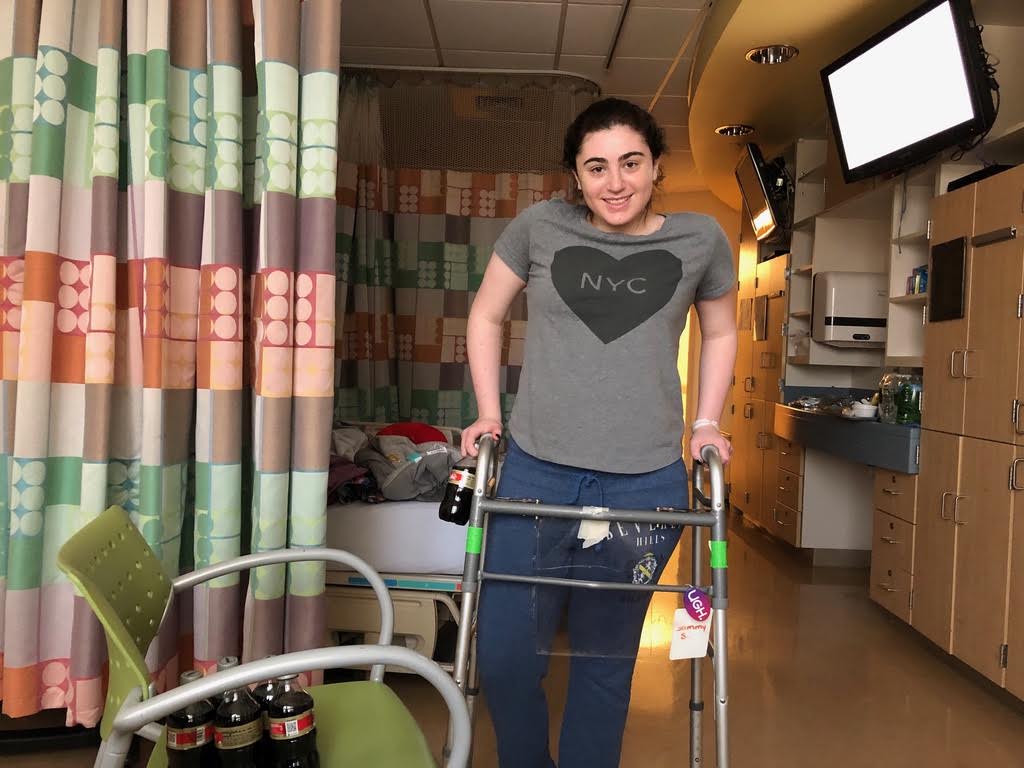
Disability Pride Month is not about celebrating illness. It recognizes that disability is not something that diminishes a person’s worth, intelligence, or potential. For Samantha, using a wheelchair due to Lyme disease changed how the world interacted with her, but it never changed who she was.
How do you hope your story changes the way people think about invisible disabilities and chronic illness?
I hope it makes people understand that you do not have to be cured to have a life. You do not have to be walking to have a life. I am not standing on a stage pretending I conquered something; I still fight every single day. My story is far from over, and honestly, I have joked that I already have enough of it in me for about three books. Not every day is a good one, and not every night is one I actually sleep through, but you own it, or it owns you, and I fight like everything to own it. I am not a victim, and I refuse to be one. It is all too easy to become a victim of your circumstances.
What is hard is pushing back and fighting for a life you have been told is impossible. The one thing this illness can never take from me is what I choose to do with my mindset. The fight has carried me from a hospital bed to sitting across from members of Congress, advocating for better testing, better research, and better education for doctors. Two things can be true at once. You can be sick and successful, in pain and ambitious, and your whole life will pass you by if you wait to be fully healed before you start living.
Most of all, I want anyone who feels invisible, and everyone caring for them, to finally feel seen. I do not care if you look fine. If you do not feel fine, then you do not feel fine, and I believe you. There is no dismissal here.
When someone who has never been a sick person, who has no reason on earth to want this, tells you something is wrong, believe them the first time. Being believed is not a small thing. It is everything. It is the difference between healing and being erased.
If a single doctor had believed me sooner, I would not be living with the permanent nerve damage and the lifelong consequences I carry today. This is what dismissal actually costs. So to every doctor reading this: listen to your patient, and imagine how you would feel if a colleague waved you off and said it was just stress, too many patients, too much charting.
Before you tell someone it is all in their head, think about the repercussions, because when you are wrong and you say it anyway, that person has to live with doubting themselves forever. That is permanent mental, physical, and psychological damage. It all comes back to the same choice, for every one of us. You own it, or it owns you. You get to decide who is in control.
Samantha Sloves is the founder of My Lyme Coach and a member of the Global Lyme Alliance NextGen Board. To learn more about her concierge-style chronic illness coaching service supporting individuals navigating Lyme disease and complex medical journeys, please visit https://www.mylymecoach.org/. You can also follow her on Instagram or TikTok at @mylymecoachorg. Her story has taught us that every experience deserves dignity, every patient deserves to be heard, and every person deserves to have their pain taken seriously.
Related Articles: LC’s T-Boz Shares Music Journey & Sickle Cell Adversity On Latest Episode of “Uncensored”, How to Combine Medical and Alternative Therapies Through Integrative Medicine